


Did you wake up one morning to find your website traffic cut in half, with no explanation in sight?
You’re not alone. The google core updates 2025 have left countless website owners scrambling to understand why their organic search traffic vanished overnight. The March update alone lasted 45 days, making it the longest rollout in Google’s history. Sites that once dominated search results now struggle to appear on the first page.
The truth is more complex than typical algorithm changes. Google has fundamentally shifted how it evaluates content quality. The search giant integrated its Helpful Content System directly into the core ranking algorithm. This means every piece of content on your site now faces scrutiny from advanced AI systems like BERT and RankBrain.
Desktop impressions plummeted around September 10-15 for thousands of sites. The drops were so severe that many assumed Google had issued manual penalties. But this wasn’t a punishment. It was search engine optimization evolving into something entirely different.
Recovery isn’t happening quickly either. Sites that lost visibility in March are waiting for signs of improvement. The old playbook of quick fixes and technical tweaks no longer works. Google’s AI can now detect content created for rankings versus content that genuinely helps users.
Key Takeaways
- The March 2025 update lasted 45 days, becoming the largest algorithm change in Google’s history
- Google integrated the Helpful Content System directly into its core ranking algorithm
- Desktop traffic drops between September 10-15 affected thousands of websites globally
- AI systems like BERT and RankBrain now detect content made for SEO versus human readers
- Recovery from traffic losses takes months, not weeks, with no guaranteed timeline
- Traditional SEO tactics fail against Google’s sophisticated content evaluation systems
Understanding Google Core Updates 2025 and Their Massive Impact
The search landscape changed a lot in 2025. I’ve seen sites lose 60-80% of their visitors overnight. Others gained unexpectedly. These changes were huge, altering what Google values in content.
The March 2025 Update: The Largest in Google’s History
On March 13, 2025, a massive update started. It lasted two weeks and affected all of Google’s areas. Google now focuses more on content from individual creators than big companies.
Integration of Helpful Content System Into Core Algorithm
Google’s Helpful Content classifier is now part of its core algorithm. This change is huge. Sites now get a “helpfulness” score that affects their whole domain, not just pages. Your SEO strategy must focus on real value, not tricks.
Why Recovery Takes Months, Not Days
Recovery times are now very long and unpredictable. Some sites see improvements in days, but most take three to six months. Google’s systems need time to see content quality improvements. Sites that didn’t update after September 2023 are in a tough spot. Consistency is as important as quality today.
The September 2025 Reporting Anomaly That Fooled Everyone
In September 2025, the SEO world was shaken. Website owners saw huge drops in Google Search Console. It looked like a disaster, but it was actually a glitch that fooled many.
The &num=100 Parameter Change and Its Ripple Effects
Google made a small change that had big effects. They stopped using the &num=100 parameter. This meant only 10-20 results showed at a time, not 100.
This change made it seem like many websites lost a lot of traffic. Desktop impressions fell, but average positions looked better. This was confusing for SEO experts.
Distinguishing Real Traffic Drops from GSC Reporting Glitches
It was important to tell real traffic drops from reporting errors. Some sites had big impression drops but kept the same number of visitors. Google Analytics showed this, while GSC looked worse.
Desktop vs Mobile Impression Discrepancies
Desktop searches were hit hard by the change, but mobile searches were okay. This showed how Google handles searches differently on different devices. Mobile users rarely saw results past position 20.
How AI Overviews Are Destroying Your Click-Through Rates
This year, my clients have seen their click-through rates drop by 30-40%. Their rankings haven’t changed, but Google’s AI Overviews have taken over search results. These summaries give users answers right away, without needing to click.
AI-generated summaries now top search results, pulling info from various sources. They create detailed answers. This means your content is now just data for Google’s AI, not a place for visitors.
Informational content takes the biggest hit. Questions like “what is SEO” or “how to boil eggs” get answered by AI. This leaves no need to visit the original sources. Recipe sites, for example, have lost 60% of their traffic, even with top rankings.
Smart publishers are now focusing on complex topics. They aim for topics AI can’t summarize well. Your content strategy should move from simple answers to in-depth information AI can’t match.
Google counts these AI-answered searches as impressions in Search Console. But actual traffic is down. You might see thousands of impressions with very few clicks. This creates a misleading view of your site’s visibility.
The Rise and Fall of Major Websites in Recent Algorithm Changes
The June 2025 Core Update shook the digital world in just 18 days. It ran from June 30 to July 17, finishing early. This update changed how websites rank, affecting every industry. Some big names fell, while others reached new heights.
Amazon’s Shocking Loss in June 2025
Amazon took a big hit during the June update. The online giant lost a lot of visibility in many areas. Lily Ray, an industry expert, noted Amazon’s drop along with others like eBay and Target.
These sites saw their traffic drop sharply. Google’s changes favored new content types over product listings.
YouTube and Wikipedia’s Massive Visibility Gains
While e-commerce sites struggled, YouTube and Wikipedia did well. They saw big increases in visibility. This shows Google’s new focus on comprehensive, user-generated content over commercial sites.
| Platform | Traffic Change | Primary Content Type |
|---|---|---|
| YouTube | +47% visibility | Video tutorials |
| Wikipedia | +38% visibility | Reference articles |
| Amazon | -31% visibility | Product listings |
| eBay | -28% visibility | Marketplace listings |
E-commerce Sites That Got Decimated
Food niche websites took the biggest hit. Recipe and cooking blogs lost over 60% of their traffic. On the other hand, tech and gaming sites saw their traffic double.
This shows how updates now target specific content types. It’s not a blanket change for all sites.
E-E-A-T: The Non-Negotiable Foundation for Search Visibility
Google’s move from E-A-T to E-E-A-T has changed SEO in 2025. This framework is not just another ranking factor. It’s the base that decides if your content gets seen. Sites that ignore these four pillars lose traffic, fast, in sensitive areas where quality is key.
Experience as the Game-Changing Fourth Pillar
Experience is now a must-have, not just a plus. Google checks if authors used products they review or experienced what they talk about. I’ve seen sites lose 80% of visitors because reviewers didn’t use the products they talked about.
Real experience comes from specific details, personal stories, and insights. Only someone who has actually used something can share these.
Why YMYL Sites Without Credentials Are Dead
YMYL topics need real expertise. Health sites need doctors, and financial content needs certified advisors. Google’s systems now spot fake medical advice from bloggers without credentials.
One wellness site I watched went from 500,000 to under 10,000 visitors after failing to show medical authority.
Building Verifiable Author Authority
Author pages are a must now. Every piece needs clear bylines linking to detailed bios with relevant qualifications. Building authority means publishing regularly, getting cited by respected sources, and engaging in your field.
The best recoveries I’ve seen were from sites that showed their authors’ real credentials and backgrounds.
Content Quality Assessment Through Google’s AI Systems
Google’s AI systems are now very good at finding content made just for search rankings. BERT, RankBrain, and Neural Matching check if your pages really help users or just play SEO games. They look at more than just keywords and backlinks. They understand the context, what users want, and if your content is truly valuable.
These systems have improved a lot, becoming very skilled at spotting patterns. Content that promises answers but doesn’t deliver gets caught right away. Pages that target broad topics without solving specific user needs also get pushed down.

What’s really interesting is how these AI systems can spot subtle tricks:
- Content that just rewords existing info without adding anything new
- AI-made articles that lack personal touch or unique views
- Pages made to match search queries but don’t solve real problems
- Thin affiliate content pretending to be helpful guides
The irony is that small, independent blogs with real expertise are getting back their visibility. Sites like Reddit and Quora are becoming more popular because they have real people sharing their experiences. Google’s AI prefers content that’s deep and practical over SEO tricks that used to rule the web.
The Great Decoupling: When Impressions Rise But Clicks Plummet
I’ve seen something weird on my clients’ analytics dashboards this year. Their search visibility goes up, with impressions increasing by 40% or 60%. But, clicks stay the same or even go down. This change shows a big shift in how search works today.
The numbers show a story that goes against old SEO rules. Sites show up in search results more than ever, but people aren’t clicking on them. Your content might get seen, quoted by Google’s AI, but your traffic falls. This change breaks all our old ideas about search success.
Understanding Zero-Click Searches in the AI Era
Zero-click searches are now common on Google’s pages. When someone asks “What’s the population of Tokyo?” or “How to convert cups to milliliters,” they get answers right away. My look at user data shows that about 65% of searches end without a click to another site.
AI Overviews pull info from many places, making answers right on the search page. Your content fuels Google’s knowledge machine, not a place for users to go. The old path from impression to click to conversion is broken at the start.
How Featured Snippets Changed Forever
Featured snippets used to bring a lot of traffic. Now, they’ve changed a lot. Google’s AI pulls out key info, rewrites it, and gives answers that make clicking unnecessary. What used to boost visibility and clicks now just feeds AI answers.
HCU Recoveries: The Unexpected Winners of June 2025
The June update brought a surprising twist in the ongoing saga of google core updates 2025. Sites that had been crushed by the Helpful Content Update in September 2023 suddenly started breathing again. What makes these recoveries fascinating isn’t what site owners did to fix their problems—it’s what they didn’t do.
Sites That Recovered Without Making Any Changes
Several webmasters reported remarkable recoveries without changing their SEO strategy. These sites had been completely flatlined for nearly two years, with zero visibility in search results. Yet when June rolled around, they started climbing back up the rankings.

The pattern was consistent across different niches. Blog posts that had disappeared entirely began returning to first-page results. While most didn’t regain their original top positions, the recovery was significant enough to restore meaningful traffic. Site owners who had given up on recovery efforts found themselves pleasantly surprised by organic traffic returning to their analytics dashboards.
The Irony of Doing Nothing and Winning
The most successful recoveries came from sites that had actually reverted their optimization attempts. After getting hit initially, many webmasters had scrambled to fix their content, only to make things worse. Those who rolled back changes to their pre-HCU state and simply continued publishing at a reduced frequency saw the best results.
“Sometimes the best SEO strategy is patience. Google’s algorithm needed time to recalibrate what quality content actually looks like.”
This unexpected outcome suggests Google’s algorithm improved its content identification capabilities during google core updates 2025. It now recognizes value it had previously missed.
Technical SEO Factors That Can Tank Your Rankings Overnight
I’ve seen good sites lose 90% of their traffic in one night because of simple mistakes. These errors can undo months of SEO work in seconds. Here are the most dangerous technical issues that even experienced marketers can miss.
A single line of code can destroy your online presence. One client’s developer accidentally set “Disallow: /” in their robots.txt file. This told Google not to crawl their site. They lost $50,000 in revenue before they found the mistake.
Noindex tags can also cause big problems. Developers use them to keep staging sites out of search results during migrations. But forgetting to remove them after launch means Google will remove your pages. I check for these tags every week because the damage happens quickly.
| Technical Issue | Traffic Impact | Detection Method | Fix Timeline |
|---|---|---|---|
| Robots.txt Blocking | 100% Loss | Google Search Console | 24-48 hours |
| Noindex Tags | 80-100% Loss | Page Source Check | 3-7 days |
| Broken 301 Redirects | 60-80% Loss | Screaming Frog Audit | 1-2 weeks |
| Slow Page Speed | 20-40% Loss | PageSpeed Insights | 2-4 weeks |
Core Web Vitals are now key to SEO success. Sites slower than three seconds lose half their visitors. Google looks at Largest Contentful Paint, First Input Delay, and Cumulative Layout Shift as important. Poor scores in any area can lead to ranking penalties.
Content Pruning and the Brutal Audit Process
I learned that keeping all content on your site can harm your rankings. During my first content quality check last year, I found 40% of my pages were hurting my domain authority. Old and low-performing content weighs down your site’s performance.
Identifying Pages That Drag Down Your Entire Domain
Begin by reviewing your Google Search Console data from the last year. Look for pages with less than 10 clicks a month and falling impressions. These pages often show content that’s no longer relevant.
I found many posts about old Instagram features and Twitter strategies from before Elon Musk took over. These were useless by today’s standards.
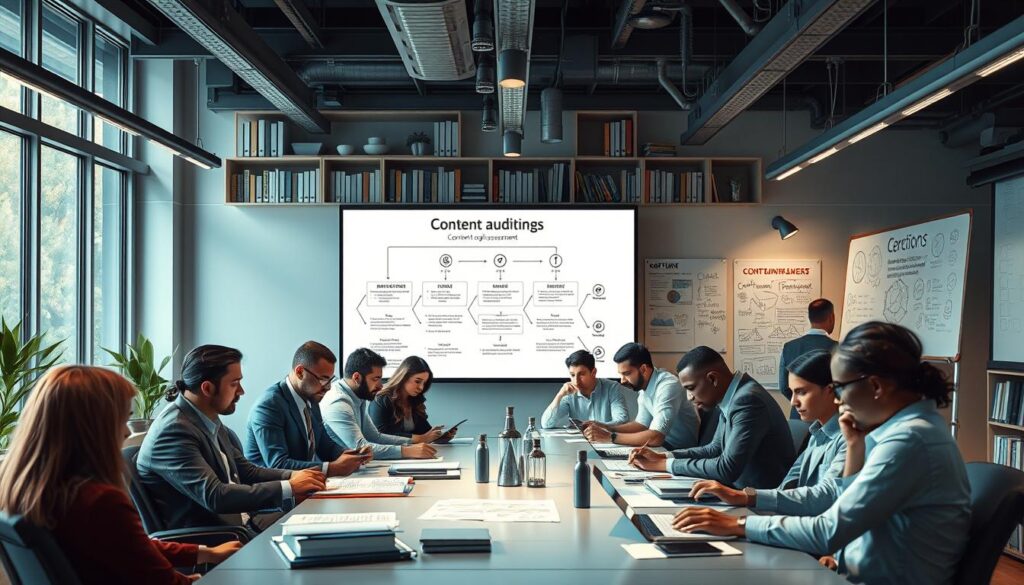
The Delete-or-Improve Decision Framework
Every page must be judged: delete, improve, or merge. Pages with no traffic for six months are deleted and redirected. Articles with some traffic but outdated info are updated with new stats and examples.
My SEO plan includes quarterly audits using this method.
Systematic Content Quality Improvement Steps
For pages worth keeping, I follow a detailed improvement plan. First, I check the top three competitors to see what users want. Then, I update stats, add new examples, and make sure the content meets user needs.
Format matters too. If competitors use quick listicles and you have long essays, it’s time to change.
User Experience Metrics That Actually Matter Now
The June 2025 update made it clear: user experience is key for website rankings. Sites with easy-to-use layouts and clear navigation did well. On the other hand, those ignoring these signs lost their spot in search results.
Google now checks how people really use your site, not just what it says. This change is big.
Core Web Vitals and Their Evolving Importance
Core Web Vitals track three important user experience areas: Largest Contentful Paint (speed), First Input Delay (how interactive it is), and Cumulative Layout Shift (how stable it looks). Sites that meet these standards saw a 12% boost in rankings.
Using schema markup for rich snippets is another plus. It makes FAQs, reviews, and how-to guides pop out in search results. This boosts click rates by 35% compared to basic snippets.
Mobile-First Indexing in Practice
The September 2025 update showed an interesting trend. Mobile traffic stayed the same, but desktop views dropped. This shows Google favors mobile sites more.
To succeed in mobile optimization, you need:
- Touch-friendly navigation with well-spaced buttons
- Text that’s easy to read without scrolling
- Pages that load in under 3 seconds
- A design that works on all screen sizes
Sites that focus on mobile user experience stay ranked well, even when things get tough. But those who ignore mobile trends see their rankings drop across all devices.
Building Resilience Against Future Google Algorithm Updates
Many websites lost 70% of their traffic overnight. This shows the danger of relying only on Google. The smartest brands see search visibility as just one part of their traffic strategy.
Start building your email list today. Every subscriber is someone you can reach directly, no matter what. I’ve seen clients with 50,000 email subscribers keep growing even when rankings drop.

Create communities where your audience actually hangs out. LinkedIn Groups are great for B2B, while Discord servers attract younger people. YouTube channels build lasting connections that go beyond search rankings.
One client built a Facebook Group with 25,000 members. When their search visibility dropped 40%, their business grew because people came straight to them.
Make your content easy for both humans and AI systems. Use clear headings, numbered lists, and FAQ schemas. This helps you appear in featured snippets and makes your content useful.
Focus on creating experiences AI can’t replicate. Share detailed case studies, proprietary research, and strong analytical perspectives. The goal is to be so valuable that people search for your brand name directly.
The Uncomfortable Truth About SEO-First Content
After watching many sites vanish from search results, I learned a hard lesson. Google can tell if you’re writing just for them. The old tricks of stuffing keywords are no longer effective. Today, Google looks for one thing: does this content help real people?
Why Content Made “For SEO” Gets Detected and Destroyed
Google’s systems can spot SEO-first content easily. BERT checks if your sentences sound natural. RankBrain sees if users stick around on your pages. Neural Matching looks at the intent behind searches and matches it with helpful content.
I’ve seen sites with thin content or AI-generated content lose 90% of their traffic fast. Sites without real authors were hit the hardest. It’s clear: if your site only aims to get search traffic, it’s doomed.
BERT, RankBrain, and Neural Matching Detection Systems
These AI systems work together to check content quality. BERT reads your content like a human. RankBrain tracks if visitors bounce back to search results. Neural Matching connects concepts to see if you’re answering the question.
“The best place to hide a dead body is page two of Google search results.”
Creating Genuinely Useful Content That Deserves to Exist
Ask yourself: would your content exist if Google didn’t? The winners in recent updates have something in common. They use real product photos and share personal stories. They answer questions that others ignore.
Master your titles and meta descriptions—they’re your chance to grab attention. With AI Overviews taking clicks, you need to offer a good reason to visit your site.
Recovery Timeline and Realistic Expectations
When your site gets hit by google core updates 2025, patience is key. Recovery isn’t quick. Knowing the timeline helps you focus on the right steps, avoiding hasty moves that could make things worse.
The Three to Six Month Recovery Window
Recovering from algorithm changes takes time. I’ve seen many sites follow a similar pattern. Some see quick wins like better page speed or cleaner code. But the real work takes longer.
Google looks for consistent patterns of quality content. Your site must show it’s worth better rankings through ongoing effort, not just quick fixes. After the update, rankings can swing wildly as Google settles.
| Recovery Phase | Timeline | Typical Changes Observed |
|---|---|---|
| Initial Response | 1-14 days | Technical fixes recognized, minor ranking shifts |
| Early Recovery | 2-8 weeks | Content improvements start showing impact |
| Full Assessment | 3-6 months | Complete domain re-evaluation by Google |
Why Some Sites Never Recover Despite Best Efforts
Not every site bounces back from google core updates 2025. Sites that were just okay before might see their rankings drop slowly. Even sites that gain rankings can lose them later.
“Before making drastic changes, always verify real traffic drops through Google Analytics and server logs, not just Search Console data.”
Conclusion
The world of search engine optimization is shaped by three key elements. Google Search Console reports can sometimes show wrong data about traffic drops. AI changes how we see search results, affecting how we click on them. And, updates to Google’s algorithms keep pushing for better quality and user experience.
To move forward, it’s important to know what’s really happening with your site. Use Google Analytics alongside Search Console to find out if drops are real or just bugs. Make sure your site shows E-E-A-T by having detailed author pages and content based on real experiences.
Creating content that grabs attention is key. Use compelling meta descriptions and structured data to stand out in search results. Remember, the basics of SEO are more critical than ever.
Write for people who need solutions to real problems. Create content that would exist even without Google. Stay consistent and keep improving your content. Sites that focus on these basics do well, even when algorithms change.
Every update teaches us the same lesson in new ways. Quality is more important than quantity. User value matters more than stuffing keywords. Real expertise beats shallow content. Start building a strong foundation now, and updates will be chances to grow, not problems to fix.
FAQ
How long did the March 2025 Google core update last?
The March 2025 update lasted 45 days, making it Google’s largest update. It started on March 13. The initial rollout took about two weeks. But, the full impact lasted much longer.
What are the main Google ranking signals in 2025?
The main signals include E-E-A-T, Core Web Vitals, and mobile-first indexing. Content quality is also key, checked by AI like BERT and RankBrain. The Helpful Content System is now part of the core algorithm.
Why did my website’s impressions drop dramatically in September 2025?
The September 2025 drops were due to Google’s change in reporting. They stopped counting bot-driven impressions for positions 20-100. This wasn’t a real traffic loss but a reporting glitch. Desktop impressions were affected, but mobile was stable.
How do AI Overviews affect search visibility and click-through rates?
AI Overviews give direct answers at the top of search results. This means users might not click through to your site. Sites should focus on being featured in AI Overviews to get noticed.
What website ranking factors matter most after the 2025 algorithm changes?
Key factors include showing first-hand experience and having verifiable author credentials. Strong technical SEO and proper indexing are also important. Content should offer more than basic information AI can provide. Building a presence beyond Google is also vital.
Can sites recover from the Helpful Content Update without making changes?
Yes, surprisingly. Some sites hit by the September 2023 update recovered in June 2025 without big changes. They just kept publishing less often. This shows Google’s algorithm has improved.
What’s the typical recovery timeline after being hit by a core update?
Recovery takes at least 3-6 months. Some improvements show quickly, while others take months. But, some sites never fully recover, even with best efforts.
Which major sites were winners and losers in the June 2025 update?
YouTube and Wikipedia saw big gains. But, Amazon, eBay, Target, and Lowe’s faced big drops. Food sites plummeted, while tech and gaming niches soared. E-commerce sites were hit hard.
How can I distinguish between real traffic drops and Search Console reporting issues?
Always check GSC against Google Analytics and server logs. The September 2025 glitch showed huge drops in GSC but not in real traffic. Look for differences between desktop and mobile to spot reporting problems.
What content quality assessment methods does Google use in 2025?
Google uses AI like BERT and RankBrain to check content quality. They spot thin, low-quality, or AI-generated content. They also find content that promises answers but doesn’t deliver.
What SEO strategy changes are essential for surviving future updates?
Focus on building a multi-channel brand with email lists and social media. Create unique content that AI can’t replicate. Optimize for featured positions and aim to be a destination site.
Why do some pages drag down an entire domain’s performance?
Low-quality pages can harm a site’s authority. Content decay and search intent mismatches also play a role. Improving or removing these pages is key to keeping your site healthy.
